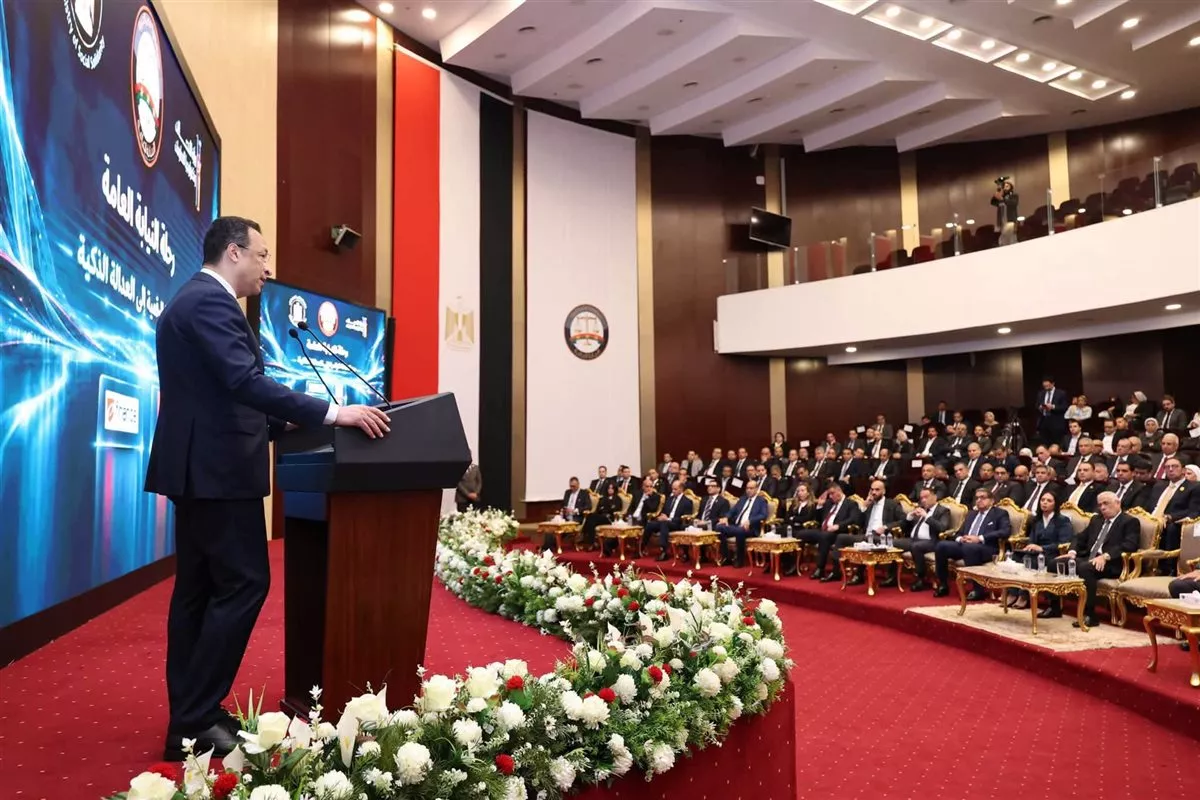



وزير الاتصالات يشهد توقيع مذكرة تفاهم مع النيابة العامة ووزارة التضامن الاجتماعي وأورنچ و«إي فاينانس»

شهد الدكتور رأفت هندي، وزير الاتصالات وتكنولوجيا المعلومات، والمستشار محمد شوقي عياد، النائب العام، والدكتورة مايا مرسي، وزيرة التضامن الاجتماعي، مراسم احتفالية النيابة العامة التي سلطت الضوء على مسيرتها نحو التحول من «العدالة الرقمية» إلى «العدالة الذكية».
أُقيمت الفعالية بمقر مكتب النائب العام، بحضور المهندس هشام مهران، الرئيس التنفيذي لشركة أورنچ مصر، والأستاذ إبراهيم سرحان، رئيس مجلس الإدارة والعضو المنتدب لمجموعة «إي فاينانس» للاستثمارات المالية والرقمية، والمهندس محمود بدوي، مساعد وزير الاتصالات وتكنولوجيا المعلومات للتحول الرقمي، والمهندس سعد رشدي، رئيس الإدارة المركزية للموارد والدعم الفني والقائم بأعمال رئيس الإدارة المركزية للمشروعات التكنولوجية والتعهيد.
وخلال الاحتفالية، شهد المسؤولون الثلاثة توقيع بروتوكول تعاون مشترك بين النيابة العامة، ووزارة الاتصالات وتكنولوجيا المعلومات، ووزارة التضامن الاجتماعي، وشركة أورنچ مصر، ومجموعة «إي فاينانس».
وعلى هامش الفعالية، افتتحت النيابة العامة مركز بيانات الذكاء الاصطناعي الجديد التابع لها، حيث استمع الحضور إلى شرح حول الخدمات التي يقدمها المركز للمواطنين.
وفي كلمته، أكد الدكتور رأفت هندي أن وزارة الاتصالات وتكنولوجيا المعلومات تعمل عن كثب مع مؤسسات الدولة، كلٌّ في نطاق اختصاصه، دعمًا للرؤية الوطنية لبناء دولة عصرية وفعّالة، موضحًا أن الهدف هو توظيف التكنولوجيا لرفع كفاءة المؤسسات، وتحسين الخدمات العامة، وصون حقوق المواطنين.
وأوضح الوزير أن بناء «مصر الرقمية» يهدف إلى جعل التكنولوجيا ركيزة أساسية في الإدارة الحديثة للدولة، وأداة لتمكين المؤسسات، ووسيلة للارتقاء بجودة الحياة. وأشار إلى أن النيابة العامة تمثل نموذجًا واضحًا لهذا النهج؛ إذ انتقلت جهود تحديثها من مرحلة رقمنة الإجراءات والخدمات إلى توظيف الذكاء الاصطناعي لدعم العمل القضائي والقانوني، وهو مجال يمس حقوق الناس ومصالحهم بشكل مباشر ويتطلب أعلى معايير الدقة والمسؤولية.
وحول الأثر العملي لهذه الجهود، أشار هندي إلى أن المواطنين سيتمكنون من متابعة معاملاتهم والوصول إلى خدمات النيابة العامة عبر قنوات ميسرة، مما يوفر عليهم الوقت والجهد. وأضاف أن تزويد أعضاء النيابة العامة بأدوات ذكية تساعدهم في دراسة ملفات القضايا ومراجعة المستندات والأدلة يجسد مبدأً جوهريًا في نهج الدولة تجاه الذكاء الاصطناعي، وهو أن تظل التكنولوجيا في خدمة الإنسان، بينما يبقى القرار في يد من يملكون المسؤولية والصلاحية لاتخاذه.
وأضاف هندي أن التحول الرقمي هو في جوهره مشروع تتكامل فيه مسؤوليات مؤسسات الدولة، لافتًا إلى أن هذا النهج يحمل بُعدًا إنسانيًا خاصًا في خدمات نيابات الأسرة، لا سيما في المسائل المتعلقة بالقُصّر والمشمولين بالوصاية أو القوامة، حيث يمكن لتبسيط الإجراءات أن يُحدث فارقًا حقيقيًا في حياة أسرة بأكملها.
وفي هذا السياق، شدد وزير الاتصالات على أهمية البروتوكول في توسيع نطاق الوصول إلى الخدمات الرقمية وتسهيل استخدامها عبر الهواتف المحمولة، واصفًا إياه بأنه نموذج للشراكة التي تجمع بين قدرات وخبرات مؤسسات الدولة والقطاع الخاص لخدمة المواطنين.
وفي ختام كلمته، أكد هندي التزام وزارة الاتصالات وتكنولوجيا المعلومات بمواصلة هذا التعاون مع النيابة العامة وسائر مؤسسات الدولة، مشيرًا إلى أن نجاح التحول الرقمي يُقاس بأثره الفعلي على الكفاءة المؤسسية، وجودة الخدمات، وتعزيز ثقة المواطنين. ووصف الاحتفالية بأنها محطة مهمة في مسيرة تطوير مستمرة، وفرصة للبناء على ما تحقق من إنجازات وتوسيع آفاق التعاون المؤسسي في توظيف التكنولوجيات الحديثة لخدمة الأولويات الوطنية وتلبية احتياجات المواطنين.
#التحول_الرقمي #العدالة_الرقمية #العدالة_الذكية #الذكاء_الاصطناعي #مصر_الرقمية
Minister of Communications and Information Technology Raafat Hendy, Public Prosecutor Mohamed Shawky Ayyad, and Minister of Social Solidarity Maya Morsy have attended the Public Prosecution’s ceremony highlighting its journey from digital justice to smart justice.
The event was held at the Public Prosecutor’s headquarters. It was attended by CEO of Orange Egypt Hesham Mahran, Chairman and Managing Director of eFinance Investment Group Ibrahim Sarhan, Assistant ICT Minister for Digital Transformation Mahmoud Badawi, and Head of the Central Department for Resources and Technical Assistance and Acting Head of the Central Department for Technological Projects and Outsourcing Saad Roshdy.
During the ceremony, the three officials witnessed the signing of a cooperation protocol among the Public Prosecution, the Ministry of Communications and Information Technology (MCIT), the Ministry of Social Solidarity, Orange Egypt, and eFinance.
On the sidelines of the event, the Public Prosecution inaugurated its new AI data center, and attendees were briefed on the services it provides to citizens.
In his speech, Hendy said MCIT is working closely with state institutions, each within its own remit, in support of the national vision for a modern, effective state. The goal, he said, is to use technology to make institutions more efficient, improve public services, and protect citizens’ rights.
He explained that building Digital Egypt aims to make technology a pillar of modern state administration, a tool for empowering institutions, and a means of improving quality of life. The Public Prosecution, he noted, is a clear example of this approach: its modernization has moved from digitizing procedures and services to using AI to support legal work, an area that directly affects people’s rights and interests and demands the highest standards of accuracy and responsibility.
Turning to the practical impact, Hendy said citizens will be able to track their transactions and access Public Prosecution services through simple channels, saving them time and effort. He added that giving prosecutors smart tools to help them study case files and review documents and evidence reflects a core principle in the state’s approach to AI: technology must serve people, while decisions remain in the hands of those who hold the responsibility and authority to make them.
Hendy further said that digital transformation is, at its core, a project in which state institutions’ responsibilities complement one another. This approach, he noted, carries particular human weight in the services of the Family Prosecution, especially matters concerning minors and persons under guardianship or curatorship, where simpler procedures can make a real difference to the life of an entire family.
In this context, the ICT Minister stressed the importance of the protocol in expanding access to digital services and making them easier to use on mobile phones. He described it as a model of partnership that brings together the capabilities and expertise of state institutions and the private sector to serve citizens.
In closing, Hendy affirmed MCIT’s commitment to continuing this cooperation with the Public Prosecution and other state institutions, saying the success of digital transformation is measured by its impact on institutional efficiency, service quality, and public trust. He described the ceremony as an important milestone in an ongoing process of development, and an opportunity to build on past achievements and broaden institutional cooperation in using modern technologies to serve national priorities and meet citizens’ needs.
https://tinyurl.com/443hn784
#DigitalTransformation #DigitalJustice #SmartJustice #ArtificialIntelligence #DigitalEgypt